| Quick answer:
The indoor tennis simulator cost varies considerably depending on what you’re building and where. A home tennis simulator cost looks very different from a commercial tennis simulator cost, and within each category, the price shifts based on your tracking technology, projection setup, court surface, enclosure design, and installation requirements. |
If you’ve been looking into getting a tennis simulator for home use or planning a commercial tennis simulator setup for a club or entertainment venue, you would’ve probably noticed that pricing isn’t exactly transparent. One quote includes installation; another doesn’t. One system comes with a subscription; another charges upfront for everything. And sometimes it can feel impossible to compare. Believe it, that’s not an accident. Tennis simulator systems are often customized, and the final cost depends heavily on the size of your space, the technology you choose, and how much customization you need. What looks like a straightforward purchase involves a lot of moving parts, and understanding those parts is what separates a smart tennis simulator investment from an expensive regret.
This guide breaks it all down clearly so you can walk into any conversation with a provider knowing exactly what questions to ask and what the answer should include.
What Is Included in a Tennis Simulator Setup?
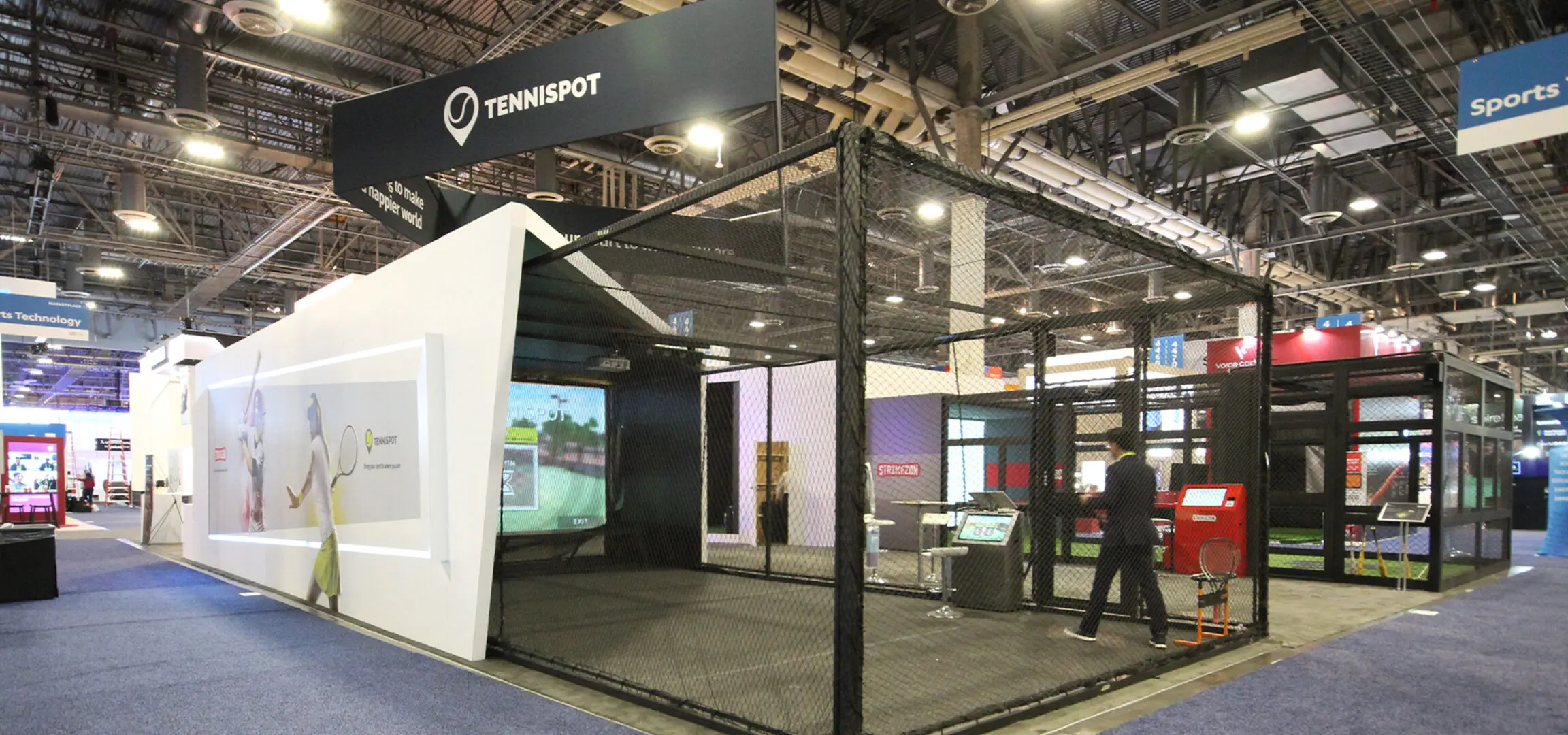
Before we move forward with any tennis simulator price discussion, you need to understand what you’re actually buying. A complete tennis simulator system is not one product; it’s several integrated components working together. Leaving any one of them out creates gaps in the experience, and those gaps often surface only after installation. Here’s what a full tennis simulator setup cost may include:
- Tracking Sensors: This is the brain of the system. These sensors measure the speed of the ball, spin, trajectory, position of landing, and accuracy of your shot in real time. Sensor quality and placement directly affect how accurately the system reads your shots. Unlike a system with basic sensors, a high-precision system gives you data that’s genuinely useful for training and improvement.
- Custom Ball Machine: The ball machine is what makes solo play and structured practice possible. It feeds balls from various positions with adjustable speed, spin, and placement. In a quality professional tennis simulator, the machine is programmable to simulate different shot types, rally patterns, and drill sequences.
- Projection and Display: A high-quality projector and screen bring the virtual court to life. The display shows the simulated environment, tracks where your shot landed, and creates the immersive experience that makes a simulator genuinely engaging. Resolution, brightness, screen size, and room lighting all affect how realistic the experience feels.
- Control Kiosk: The kiosk is the user interface, the panel where players select game modes, configure drills, view performance stats, and navigate the software. A well-designed kiosk makes the system easy to use without instruction. For commercial settings, ease of use is non-negotiable since multiple players with different skill levels will be operating it independently.
- Enclosure and Surface: The enclosure defines the physical boundaries of the playing space: walls, net, side panels, and the overall structure of the booth. The floor surface matters, as a purpose-built court surface protects players, handles lateral movement safely, and contributes to the realism of the experience. Neither of these is a minor consideration. A poor enclosure compromises safety while a poor surface compromises play quality and player comfort.
- Software and Game Modes: The software is what ties everything together. It runs practice modes, rally simulations, serve tracking, AI opponent modes, and performance analytics. Ongoing software updates are also part of the equation, which is why many tennis simulator systems carry a monthly subscription fee for continued access to the platform.
Traditional Tennis Court vs. Indoor Tennis Simulator
For anyone weighing a traditional tennis court and an indoor tennis simulator, the comparison goes deeper than just cost. Accessibility, maintenance, weather, and long-term usability all play significant roles in the decision. A traditional outdoor or indoor court gives you the real-surface experience but comes with real-surface limitations, like scheduling, weather, maintenance contracts, and the need for partners or coaches. A tennis simulator for home or commercial use removes most of those barriers and adds data-driven training that a physical court alone can’t provide.
| Factor | Traditional Tennis Court | Indoor Tennis Simulator |
| Accessibility | Limited by booking, partner availability, coaching hours | Anytime, solo or with friends and family |
| Weather dependency | High (outdoor) / Low (indoor hardcourt) | None |
| Upfront cost | High. Involves construction, surfacing, fencing, lighting | Varies by configuration; lower than full court construction in most cases |
| Ongoing maintenance | Resurfacing, net maintenance, facility upkeep | Software subscription, sensor calibration, general equipment care |
| Training data | None without external technology | Built-in: shot speed, accuracy, spin, rally performance |
| Solo play | Not practical without a ball machine | Built-in |
| Coaching integration | Requires scheduling a coach | Guided programs built into the software |
| Return on investment | Slow; recreational use only unless commercialized | High for commercial venues & significant for serious players |
Is an Indoor Tennis Simulator Worth the Investment?
If you are someone who is still stuck on whether a tennis simulator will be a worthy investment, the honest answer is: it depends on what you’re comparing it to, and what you’re trying to accomplish. For a home player who currently books court time by the hour and pays a coach for regular sessions, a home tennis simulator’s cost can represent a relatively fast break-even point when you stack up what’s being spent on court fees, coaching, and travel over a year. More than the math, though, it’s the convenience factor that tends to be the actual decider. The ability to practice at 7 am, at 9 pm, or in the middle of winter without booking anything or arranging anything is genuinely valuable, and it’s the value that’s hard to put a precise number on until you actually have it.
For commercial tennis simulator installations, clubs, sports entertainment venues, academies, and multi-sport facilities, the return on investment case is more straightforward. A simulator bay generates revenue per session, attracts members who wouldn’t otherwise engage with the facility, and does it without the overhead of a full indoor court build-out. The tennis simulator installation cost and ongoing subscription are weighed against per-session revenue, membership uplift, and utilization rates. Most commercial operators in this category find the numbers compelling within the first couple of years. For both use cases, investing in a tennis simulator is absolutely worth it.
How Much Space Do You Need for a Tennis Simulator?
One of the most common surprises in the buying process is the space requirement. A tennis simulator system doesn’t need a full court, but it does need thoughtfully planned dimensions. Whether you’re planning a home tennis simulator or a commercial tennis simulator installation, measure carefully before getting too far into equipment conversations. The table below shows approximate requirements for each setting.
| Factor | Home Installation | Commercial Installation |
| Depth required | ~23–36 ft | ~30–36+ ft |
| Width required | ~15–17 ft | ~17–20+ ft |
| Ceiling clearance | ~10–11 ft minimum | ~10–11+ ft recommended |
| Floor surface | Purpose-built court surface or padded sport floor | Commercial-grade court surface |
| Additional considerations | Lighting, ventilation, sound dampening | ADA compliance, multiple bays possible, customer access flow |
For home installations, a finished basement, large garage, or purpose-built room can work well, provided ceiling height is sufficient. For commercial setups, the space planning often involves multiple bays and customer flow considerations that affect layout. In both cases, getting a space assessment before purchasing is a strong recommendation.
What Factors Affect Tennis Simulator Cost?
The indoor tennis simulator price you’re quoted is a sum of decisions across several categories. Understanding each one helps you evaluate whether a quote is comprehensive and where you might have room to adjust the specification. Here are the key factors that move the number:
Tracking and Sensor Technology
Sensor technology is often the biggest differentiator between systems at different price points. Higher-precision sensors track more variables, like ball spin, exact landing position, serve speed, and shot angle, all with greater accuracy. For casual home use, a mid-tier sensor system may be perfectly adequate. For a serious player or a commercial operation, investing in a higher-tier tracking system is usually the right call for better accuracy and feedback.
Ball Feeding and Return Automation
The sophistication of the ball machine affects both the training experience and the practical usability of the system. A basic machine feeds balls in predictable patterns; an advanced machine replicates a wide variety of shot types, adjusts on the fly, and integrates seamlessly with software-driven drill programs. For commercial settings especially, the durability and reliability of the ball machine under high daily usage is a significant consideration.
Screen and Projection Quality
The projection setup affects immersion, feedback readability, and the overall feel of the experience. Higher resolution, higher brightness, and faster refresh rates produce a sharper, more realistic virtual environment, and that directly affects how engaging the experience is for players. For a home setup where the primary goal is training rather than entertainment, there may be more flexibility here.
Software and Game Modes
The software layer is what players actually interact with every session. The depth of game modes, richness of practice programs, and quality of performance analytics all contribute to how much value players extract from the system over months and years of use. Some platforms offer a one-time software license; others, including many professional tennis simulator systems, use a subscription model that funds ongoing development and updates. Both models have merit; what matters is understanding what’s included and what future updates will cost.
Court Surface
The floor surface inside the simulator enclosure affects both performance and safety. A purpose-built tennis surface handles lateral movement correctly, reduces injury risk, and contributes to the realism of the experience. Cutting corners here by using a generic sports floor or matting creates performance inconsistencies and safety considerations that affect both the player experience and the operator’s liability in commercial settings.
Ongoing Maintenance and Support
The tennis simulator investment doesn’t end at installation. Software subscriptions, sensor calibration, projector bulb replacement, ball machine servicing, and technical support all carry costs that vary by provider and usage volume. So the quality and responsiveness of ongoing support is a real part of the value equation, not an afterthought. When comparing providers, the support structure deserves as much attention as the hardware specifications.
Mistakes to Avoid When Buying an Indoor Tennis Simulator
Most buyers who end up disappointed made at least one of these errors before signing anything. Thus, they’re worth knowing before you start the process.
- Comparing prices without comparing what’s included. A lower quote that excludes installation, software, or the enclosure structure isn’t cheaper; it’s incomplete.
- The ball machine is what you’ll actually be hitting against every session. Cutting costs here to save on the overall tennis simulator price often means a training experience that’s frustrating rather than useful.
- Some buyers focus entirely on hardware cost and don’t ask about ongoing software fees until after purchase. These fees are part of the real tennis simulator cost; make sure you understand the total ownership cost, not just the day-one price.
- Assuming your space will work without a proper review is a risk. A qualified provider should assess your space, or at minimum review detailed measurements, before recommending a configuration.
- After-sales support, calibration services, and software updates are part of the long-term value. A provider who is difficult to reach post-installation is a major operational problem for a commercial tennis simulator and a frustrating one for a home installation.
- Not asking about the enclosure structure. Some systems include the enclosure; others treat it as a separate scope. If the booth structure isn’t in the quote, find out who’s responsible for it and what it will cost.
Final Thoughts
The indoor tennis simulator cost question doesn’t have one universal answer, but it does have a logical framework. Understand what components you need, measure your space carefully, ask providers to itemize everything in their quotes, and think about the total cost of ownership rather than just the upfront number. Whether you’re planning a home tennis simulator for year-round personal training or a commercial tennis simulator to generate revenue for a club or venue, the fundamentals are the same: get the right specification for your use case, choose a provider who will be there after installation, and treat the tennis simulator investment as exactly that: an investment, not just a purchase.
Frequently Asked Questions
What Is the Average Cost Of a Tennis Simulator?
The average cost of a tennis simulator varies considerably based on the components included. A basic home system with essential components sits at a lower range; a fully configured professional tennis simulator with high-precision sensors, advanced projection, and a sophisticated ball machine represents a substantially larger investment.
How Much Does a Commercial Tennis Simulator Cost?
Commercial tennis simulator cost is influenced by scale, configuration, and the level of technology involved. Multi-bay setups, commercial-grade enclosures, higher-throughput ball machines, and robust software platforms all add to the total. Commercial buyers should also factor in booth structure costs, ongoing software subscriptions, and maintenance contracts.
What Is the Best Tennis Simulator?
The best tennis simulator system for a given buyer depends on their specific use case rather than one universal ranking. That said, the factors that distinguish a genuinely high-quality system are consistent: precision sensor tracking; a capable ball machine; an intuitive software platform; a reliable, well-built enclosure and court surface; and strong after-sales support from the provider.
What Is the Difference Between a Home and Commercial Tennis Simulator Setup?
The core technology is often similar in a commercial and a home tennis simulator setup, but the configuration and build quality differ in important ways. Commercial tennis simulator setups are designed for high daily usage by multiple players with varying skill levels. Home tennis simulator setups prioritize space efficiency, ease of use for a single household, and a lower total footprint.
Can a Tennis Simulator Actually Improve Your Game?
Yes. A quality professional tennis simulator provides structured, repetitive practice that’s difficult to replicate on a court without a dedicated coach. Serve speed tracking, shot-placement accuracy, rally-consistency data, and drill-specific feedback give players concrete information about what they’re doing well and where the gaps are. For players who practice consistently, the data layer alone tends to accelerate improvement considerably compared to unstructured court time.
How Long Does It Take To Install a Tennis Simulator?
Tennis simulator installation cost and timeline both vary based on the complexity of the space and the system. A straightforward home installation in a pre-prepared room can be completed in a matter of days to a few weeks; a commercial installation involving booth construction, multi-bay setup, and electrical work typically takes longer and should be planned with the provider well in advance.
Related Blog Posts